
Contributing author: JS Rubbi Nunan
Tasks: Celebrate a recent publication; Recommend an approach or strategy; Highlight an inspiring case study
Keywords: Values-Based Education, bias, diversity, equity, inclusive pedagogy, multilingual education
Positionality statement: I write as a co-editor of this volume and as a researcher committed to inclusive and equitable education across educational contexts.
Introduction
Addressing bias, embracing diversity, and promoting equity are essential in today’s education systems. Classrooms today reflect the diversity of our global societies. Learners come from different cultural, linguistic, and social backgrounds. Yet, many education systems still rely on approaches that do not fully recognise or support this diversity. As a result, some learners experience exclusion and unequal opportunities to participate and succeed. As classrooms continue to reflect increasing cultural, linguistic, and social diversity, educators are called to move beyond good intentions and adopt intentional, inclusive practices that support all learners. Such inclusive classrooms foster belonging, equitable participation, and success for all.
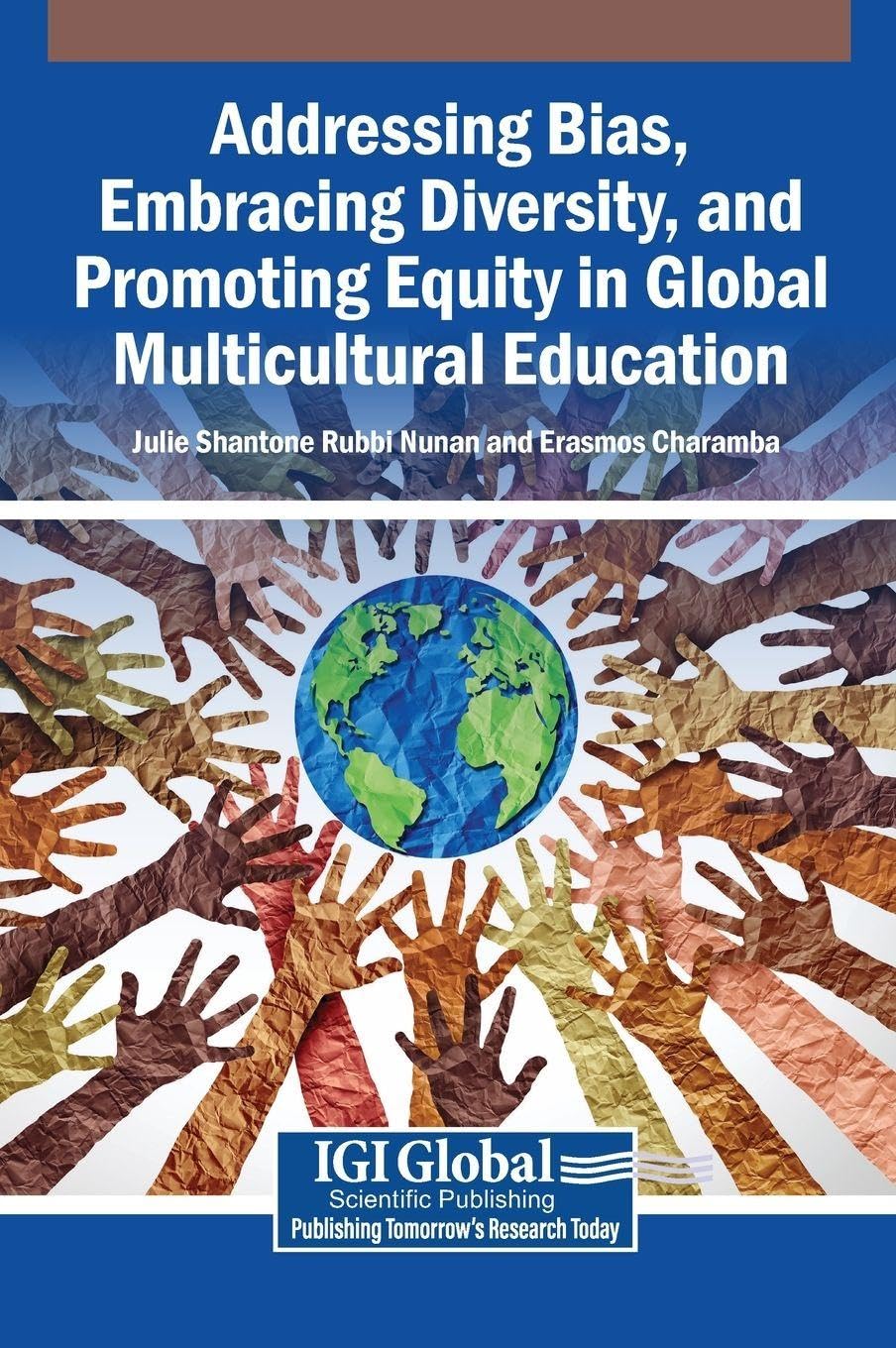
Our recent co-edited book, Addressing Bias, Embracing Diversity, and Promoting Equity in Global Multicultural Education, developed in collaboration with Erasmos Charamba, responds to this challenge and offers both insight and practical guidance for this work. Drawing on global perspectives, the volume brings together fifteen diverse chapters that address issues such as multilingual education, inclusive curriculum design, culturally responsive pedagogy, and the use of technology to support equitable learning across different educational contexts (Rubbi Nunan & Charamba, 2026). Collectively, the chapters explore questions such as: How can educators address bias? How can diversity be embraced as a strength? What practical approaches promote equity and inclusion across diverse educational contexts?
The book demonstrates how inclusive education can be meaningfully implemented across different settings. Developed through collaboration between scholars from diverse global contexts, including contributors from South Africa, Syria, the United States, India, and Indonesia, the book spans early childhood, school, teacher, and higher education, exploring how education can become more inclusive and equitable. In this blog, I share key lessons from the book, focusing on what effective practice in Values-Based Education (VbE) looks like.
Why Addressing Bias Matters
One of the key messages of the book is that education is not neutral. The way we teach, the languages we prioritise, and the knowledge we value all shape learners’ experiences. These choices can either support inclusion or reinforce inequality.
Bias in education is often subtle. It may appear in teaching materials, classroom practices, or language policies that favour one group over others. When these biases are not addressed, they can limit learners’ participation and achievement. For example, Chapter 1 explores culturally responsive teaching in South African schools, highlighting the importance of connecting teaching to learners’ cultural backgrounds to support more inclusive learning environments.
Values-Based Education requires more than awareness. It calls for educators to question and challenge practices that actively exclude learners. This is an important step toward creating fair and supportive learning environments. While broader structural inequalities may not be easily changed, educators can make a meaningful difference through inclusive choices in their everyday teaching practices.
Seeing Diversity as a Strength
A central idea in the book is that diversity should be seen as a resource, not a problem. Learners bring valuable knowledge, languages, and experiences into the classroom. When these are recognised, learning becomes more meaningful and engaging.
Inclusive classrooms allow learners to connect new ideas to their own lives. They also create opportunities for learners to learn from one another. They recognise and value learners’ diverse identities, languages, and experiences, creating learning environments where all learners can participate meaningfully. For example, Chapter 3 illustrates how culturally and linguistically inclusive classrooms can support learners by recognising the importance of language and learners’ backgrounds in the teaching and learning process. This validation not only improves academic success but also promotes respect and understanding.
Moving toward this approach requires a shift in thinking—from managing diversity to embracing it as part of everyday teaching and learning. For example, Chapter 2 on Multilingual Education illustrates one shift in thinking by challenging deficit views of linguistic diversity and highlighting how learners’ full linguistic repertoires can be recognised as valuable resources for learning.
Inclusive Practices in Action
The book highlights practical ways to support inclusive education. One important approach is translanguaging, where learners use all their languages to understand and express ideas. This teaching and learning strategy does not demand that teachers be proficient in all learners’ languages, but rather requires intentional approaches that recognise learners’ linguistic resources and create opportunities for meaningful participation. This approach helps multilingual learners participate more fully and build confidence in their learning.
Another important area is the use of technology. When used carefully, technology can expand access to knowledge, connect learners across contexts, and support different ways of learning. It can also give learners more opportunities to express their ideas and perspectives. For example, Chapter 10 on technology in language education illustrates how digital tools can support multicultural classrooms by engaging learners with diverse resources and voices. Chapter 11 on technology and inclusive education highlights how digital tools can enhance accessibility, participation, and diverse learning needs through personalised learning, alternative formats, and collaboration.
Across these examples, one message is clear: inclusive practice must be intentional. It requires planning, reflection, and a willingness to adapt teaching methods to meet the needs of all learners.
The Role of Educators
Educators play a key role in creating inclusive classrooms. Their attitudes, beliefs, and actions shape the learning environment.
The book emphasises the importance of self-reflection. Educators need to think critically about their own assumptions and how these may affect their teaching. This helps them respond more effectively to diverse learners. For example, Chapter 5 on Reimagining Education highlights the importance of critically examining historical biases and questioning assumptions that shape what is taught, how it is taught, and whose knowledge is valued.
Educators also model values through their behaviour. How they treat learners, respond to differences, and create opportunities for participation all contribute to a sense of belonging in the classroom.
Conclusion
Ultimately, Addressing Bias, Embracing Diversity, and Promoting Equity in Global Multicultural Education invites us to imagine an educational future where diversity is not viewed as a challenge, but as a foundation for meaningful learning, belonging, and transformation. At a time when classrooms are becoming increasingly diverse, this book offers global perspectives and practical insights to support more equitable and inclusive education.
This book is a call to move beyond recognising difference towards actively valuing and responding to it. It hopes to inspire reflection, dialogue, and action towards learning environments where every learner’s identity, knowledge, and experiences are valued, and where inclusion becomes an everyday reality.
References
Rubbi Nunan, J. S., & Charamba, E. (Eds.). (2026). Addressing bias, embracing diversity, and promoting equity in global multicultural education. IGI Global. https://doi.org/10.4018/979-8-3373-3591-9